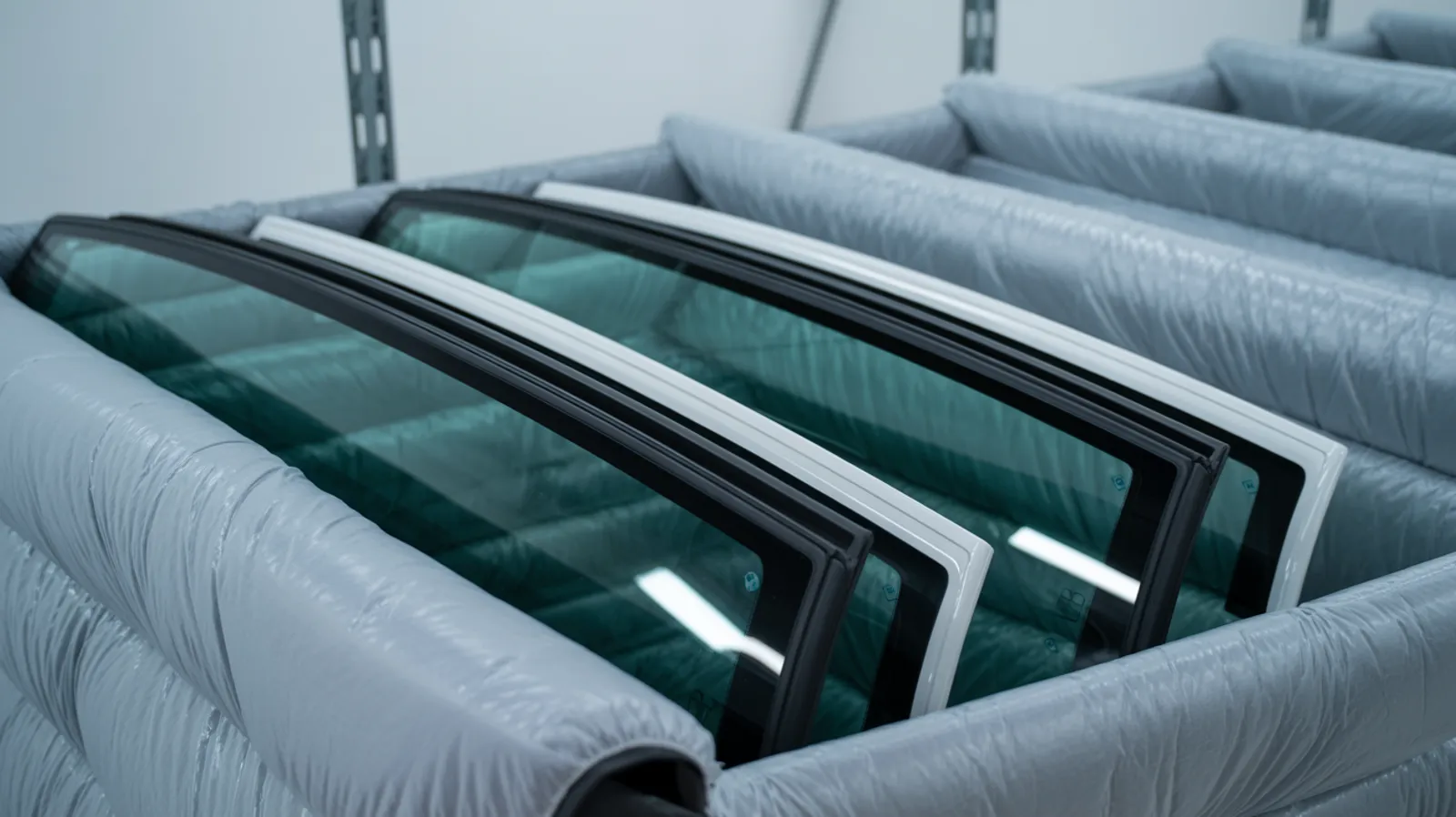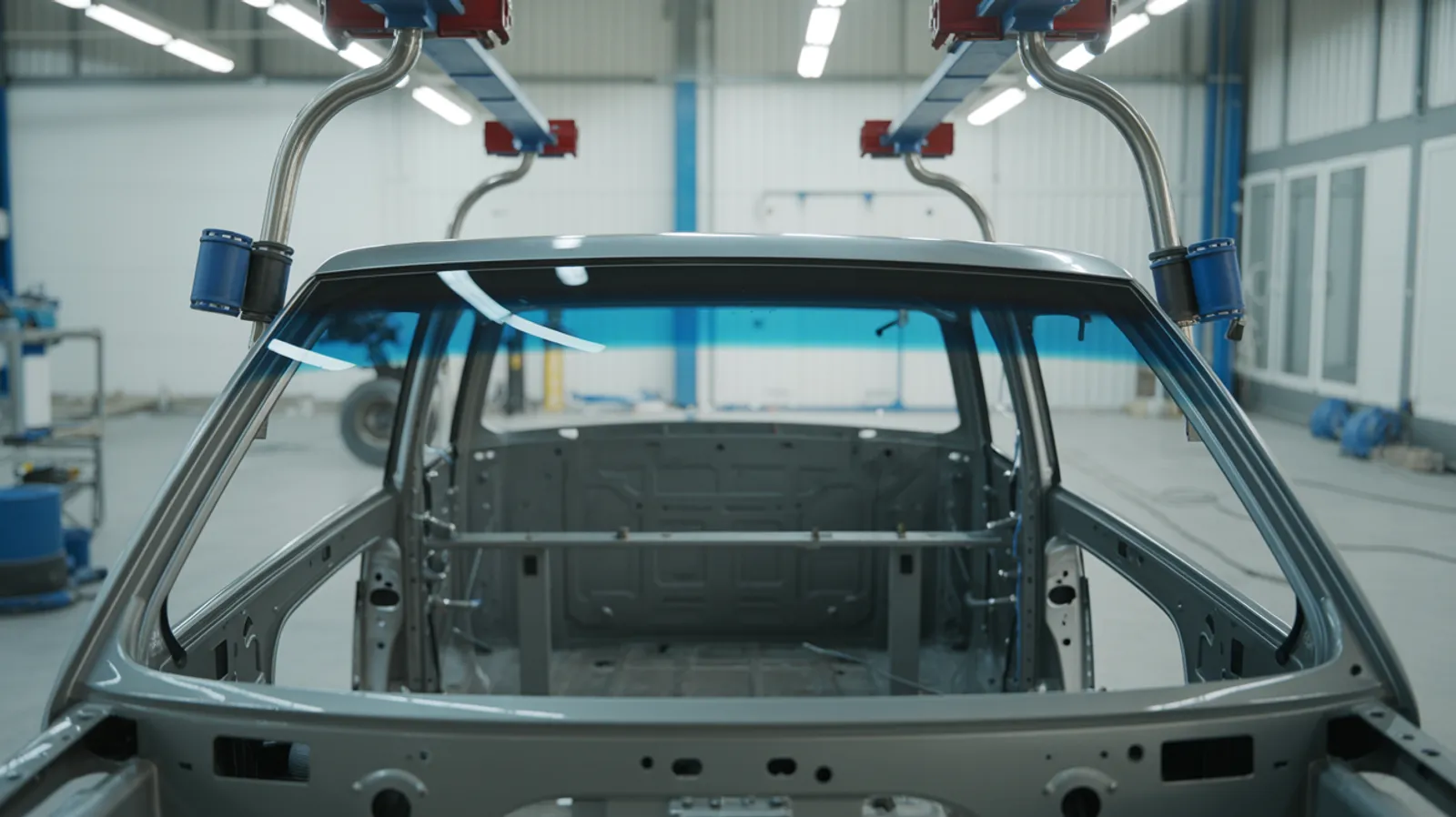
Plan on your car being out of service for roughly two to three hours, even though the glass work itself takes about an hour. The install is the fast part. What stretches the appointment is everything around it: inspection, prep, the adhesive cure, and — on most modern vehicles — recalibrating the camera behind the mirror.
Here's what actually happens in that window, step by step, and how to get a straight answer on the one question that matters most: when it's genuinely safe to drive.
The timeline at a glance
| Stage | Typical time | What's happening |
|---|---|---|
| Check-in and inspection | 10–15 min | Verify glass, sensors, features; protect the interior |
| Removing the old windshield | 15–20 min | Cut the old urethane, lift the glass out |
| Pinch weld prep | 10–20 min | Trim old adhesive, inspect and treat bare metal |
| Prime and set the new glass | 15–20 min | Prime, lay the bead, set the windshield, tape it |
| Adhesive cure | Varies — ask | Safe drive-away time for that adhesive and conditions |
| ADAS recalibration | ~30 min | Camera aligned to manufacturer spec |
Those numbers describe a straightforward windshield replacement on a vehicle in good condition. Every stage below explains what can push it longer.
1. Check-in and inspection (10–15 minutes)
Before anything is cut, the technician confirms the part. Two vehicles that look identical in a parking lot can take completely different windshields depending on rain sensors, heated wiper park areas, acoustic interlayers, heads-up display, and whether there's a forward-facing camera behind the mirror.
The tech also looks at the surrounding trim and mouldings, checks for existing body damage near the glass, and covers the dash, hood, and seats. This is also when a good shop tells you what the safe drive-away time will be — before the job starts, not after.
2. Removing the old windshield (15–20 minutes)
The old glass is held in by a bead of cured urethane, and it has to be cut free without gouging the metal underneath. Cowl panels, wipers, and mouldings come off first, then the bead is cut with a wire or a cold knife and the glass is lifted out.
Removal slows down when trim is brittle from years of Arizona sun, or when a previous installer used excessive adhesive or the wrong technique. Both are common on vehicles that have already been through a replacement.
3. Prepping the pinch weld (10–20 minutes, and don't let it be rushed)
This is the step that separates an install that lasts from one that leaks in the first monsoon. The old urethane is trimmed down to a thin, uniform layer, and the bonding surface is cleaned.
If there's rust or bare metal on the pinch weld, it has to be addressed before new adhesive goes on — urethane will not bond reliably to corrosion, and the problem grows underneath the glass where nobody sees it. Finding corrosion is the single most common reason an appointment runs long, and it's the right reason to take extra time.
4. Priming and setting the glass (15–20 minutes)
Primer goes on the frit band of the new windshield and on any exposed pinch weld areas, and it needs its own flash time before the bead can be laid. Then a continuous bead of urethane is applied at a consistent height and profile.
The glass is set once. There's no adjusting it later — the bead is already grabbing — so the placement has to be right on the first try. Vehicle-specific sensors, camera brackets, mirror mounts, and mouldings go back on, and retention tape holds everything in position while the adhesive builds strength. Our technicians are Sika certified, which means the adhesive is applied to the manufacturer's process rather than by feel.
5. Cure time — the part that isn't optional
At this point your windshield is in and it looks finished. It isn't structurally finished. Urethane needs time to cure before the glass can do its real job, which is more than keeping the wind out: a bonded windshield contributes to roof crush resistance and provides the backstop your passenger airbag deploys against.
That's why the next section matters more than any other number in this article.
Safe drive-away time: the honest answer
Safe drive-away time (SDAT) is set by the adhesive manufacturer, not by the shop, and it is not one universal number.
Any installer who quotes you a single figure for every car, every product, and every day of the year is guessing. SDAT depends on:
- Which adhesive was used. Different urethane products have different published cure profiles. Fast-cure products exist; not every job uses one.
- Temperature. Cure chemistry moves faster warm and slower cold.
- Humidity. Most automotive urethanes are moisture-curing. This is genuinely relevant in Phoenix — dry-season air is not the same environment as a monsoon afternoon, and dry air is not the favorable direction.
- The vehicle itself. Airbag configuration and glass size factor into the manufacturer's stated conditions.
So the correct answer to "when can I drive?" is: ask your installer for the SDAT of the specific adhesive they used, under today's conditions. A shop that knows what it's doing will have that number ready and will tell you without being pushed. If you get vague reassurance instead — "give it a bit" — that's a real warning sign, and it's worth walking.
At Glass Detail we tell you the safe drive-away time up front, so you can plan the rest of your day around it instead of finding out at the end.
6. ADAS recalibration (~30 minutes)
If your vehicle has lane-keeping assist, automatic emergency braking, adaptive cruise control, or forward-collision warning, there's a camera aiming through the windshield — and moving the glass moves its reference. Recalibration brings it back to the manufacturer's specification.
We handle calibration in-house with Autel equipment, typically about 30 minutes after the install, so it happens in the same visit rather than becoming a second appointment at a dealership days later. Whether your vehicle needs a static procedure, a dynamic road procedure, or both depends on the manufacturer — our guide to ADAS calibration after a replacement covers the difference in detail.
Skipping calibration doesn't save you time in any meaningful sense. It just sends you home with safety systems that may be aiming slightly off.
What makes a replacement take longer
Most of the schedule risk is discovered after the old glass is out:
- Corrosion on the pinch weld — must be treated, not covered up
- Seized or brittle trim from long-term sun exposure
- A previous bad install that left uneven or excessive adhesive
- Vehicles with HUD, heated glass, or rain/light sensors that need careful transfer and verification
- Less common vehicles where the correct part takes longer to source
None of these are reasons to rush. They're reasons a two-hour estimate occasionally becomes three.
Does mobile service take longer?
Usually not — and often it costs you less total time. Mobile windshield replacement follows exactly the same sequence, and the cure clock runs while your car sits in your driveway or office lot instead of a shop parking space. You're not waiting in a lobby for any of it.
The real constraints are environmental. Blowing dust, rain, or a vehicle parked in direct sun on a 115°F afternoon can compromise a clean bond, so those jobs move to shade, to an earlier slot, or into the shop at 2910 N. 7th Ave. We run mobile service across Phoenix and Central Arizona — Scottsdale, Tempe, Mesa, Chandler, Gilbert, Glendale, and Peoria included — and the service area page has the full list.
How it compares to other auto glass work
| Service | Typical hands-on time |
|---|---|
| Chip repair | About 15 minutes |
| Windshield replacement | About 1 hour, plus safe drive-away cure |
| ADAS recalibration | About 30 minutes, same visit |
| Window tinting | About 2 hours |
The contrast is worth noting. A chip caught early is a 15-minute windshield repair with no cure time and no calibration — you drive off immediately. Once Arizona's thermal swing turns that chip into a crack, you're in the timeline above instead. If you're getting a replacement anyway, your first chip repair afterward is free with us.
The first 24 hours after you drive away
Your technician will give you aftercare instructions specific to the adhesive used. Typically that includes leaving the retention tape on for the period they specify, cracking a window slightly so closing a door doesn't pressurize the cabin against fresh adhesive, avoiding high-pressure car washes, and taking it easy on rough roads. Follow the instructions you're given rather than general advice from the internet — including this paragraph.
Our installs carry a lifetime nationwide workmanship warranty, so if something isn't right, it gets made right.
Booking it without losing a day
The realistic plan: block two to three hours, expect to be told your safe drive-away time before work begins, and confirm whether your vehicle needs calibration when you book — that's the difference between a same-visit finish and a second trip.
Tell us your year, make, and model and we'll give you a specific time estimate for your vehicle along with a free quote, usually within two hours during business hours, with next-business-day service as the goal. Get in touch with Glass Detail or call (480) 525-0335, and we'll tell you exactly how long your car will be off the road before you commit to anything.
Need auto glass service in Phoenix?
Free estimate within 2 hours, mobile service, and insurance handled. Let's get you back on the road.
Frequently asked questions
Only after the safe drive-away time for the specific adhesive used on your vehicle has passed. That figure is set by the adhesive manufacturer and varies with the product, the temperature, and the humidity that day. Your installer should tell you the exact time before they start, and again before you leave. If nobody gives you a number, ask.
The glass work itself is usually about an hour. Extra time comes from ADAS camera recalibration, corrosion found on the pinch weld once the old glass is out, sensors and mouldings that have to be transferred, or a vehicle that needs a less common part. Cure time also runs after the install is finished.
Yes, in most cases. Mobile replacement follows the same steps as shop work, and the cure clock runs while your car sits where it is — so it often costs you no extra time. The exceptions are blowing dust, rain, or extreme conditions that would contaminate the bond, in which case a shop bay is the safer call.