Pull a windshield off a late-model vehicle and you are not holding a pane of glass. You are holding a laminated structural panel with an optical prescription, usually some kind of coating, plus a sensor housing, a camera bracket, occasionally a heating grid, and a bonded edge that on many vehicles helps support the roof and acts as the backstop for the passenger airbag.
That's why two windshields listed for the same year, make and model can be completely different parts, and why the cheapest available piece of glass is sometimes the one that leaves you with wipers that sweep on a clear day or a lane-keeping system reading the road slightly off. Here's a tour of what's actually in there, component by component, and what each one changes on replacement day.
The glass itself is a sandwich, not a sheet
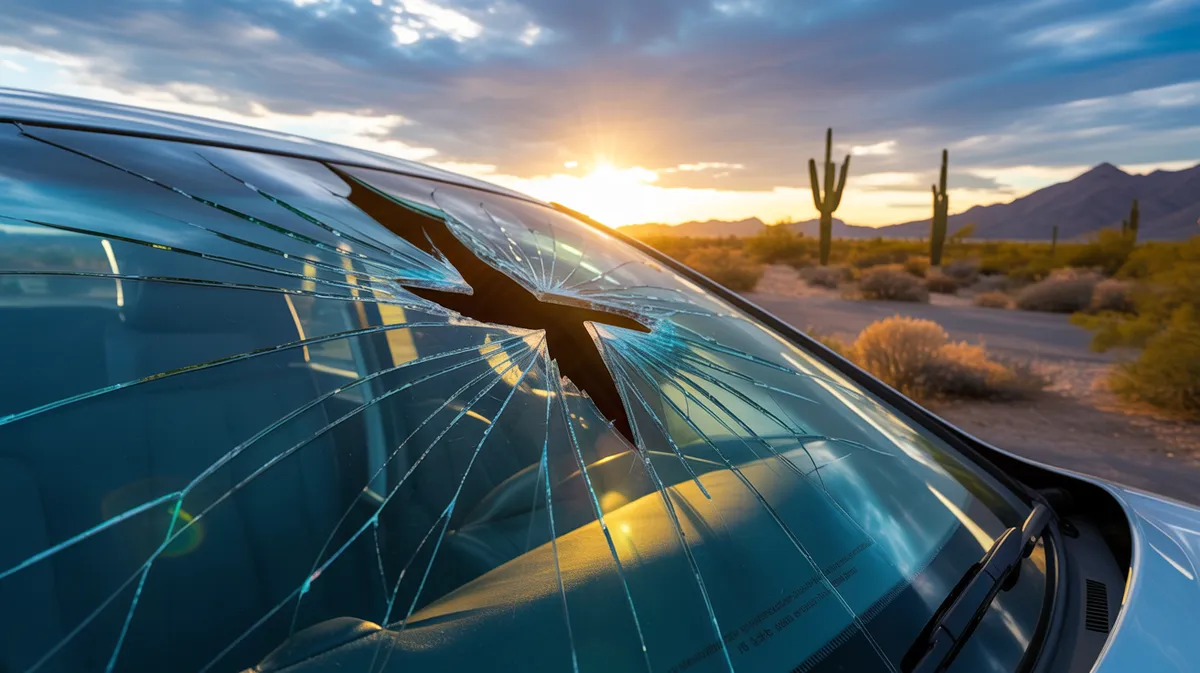
Windshields are laminated: two layers of glass bonded around a plastic interlayer, typically PVB. That's what holds the glass together when a rock hits it on the I-10 instead of letting it shatter into your lap, and it's also where a surprising amount of the engineering hides.
Acoustic interlayer
An acoustic windshield uses a modified interlayer — a softer damping core sandwiched inside the plastic — tuned to absorb the high-frequency noise that ordinary laminated glass passes straight through. Wind rush, tire roar and engine whine all drop noticeably. If your vehicle came from the factory with acoustic glass and it gets replaced with a standard laminate, nothing warns you. The car just gets louder, and most people can't put their finger on why.
You can usually tell by reading the printed logo block in a bottom corner of the glass. Acoustic glass is generally marked with a word like Acoustic, SoundScreen or a similar maker-specific term.
Solar and infrared-reflective coatings
A lot of modern glass carries a thin metallic-oxide or infrared-reflective layer designed to bounce solar heat before it enters the cabin. In Phoenix that isn't a luxury feature — it's the difference between an interior that's brutal after two hours in a parking lot and one that's merely bad.
The tradeoff is that a metallic layer also attenuates radio signals. Glass manufacturers deal with this by leaving small uncoated "windows" in specific spots for toll transponders, GPS and other antennas. Those windows are part of the design of that specific piece of glass. Swap in a different coated windshield without them and a toll tag mounted in the usual place can stop reading reliably.
The HUD wedge
This one surprises people. A heads up display windshield is not just standard glass with a projector aimed at it. The interlayer is wedge-shaped — slightly thicker at the top than the bottom — because a windshield's inner and outer surfaces each reflect the projected image. On flat glass those two reflections land in different places and you see a doubled, ghosted speedometer floating over the hood. The wedge angles the surfaces so both reflections converge into one crisp image at the driver's eye position.
Install flat non-HUD glass in a HUD-equipped car and it will fit perfectly, seal perfectly, and produce a permanent double image. There's no calibration that fixes it. The only fix is the correct glass.
What's bonded to, or built into, the glass
The rain and light sensor
A windshield rain sensor doesn't detect water directly. It fires infrared light into the glass at an angle and measures how much bounces back off the outer surface. Dry glass reflects most of it. Water on the surface changes the refraction and lets some escape, and the drop in returned light tells the wiper module how hard it's raining. The same housing usually carries an ambient light sensor for automatic headlights and, on many vehicles, a humidity sensor for automatic defogging.
Because the sensor reads through the glass, the optical path between the two has to be perfect. That's the job of the gel pad or silicone coupling gasket sitting between the sensor and the windshield. It's a consumable. Reuse a stretched or contaminated pad, or leave an air bubble under it, and the sensor sees a permanent false signal — which is why a car comes back from a bad install with wipers that fire on a cloudless day.
The forward-facing camera
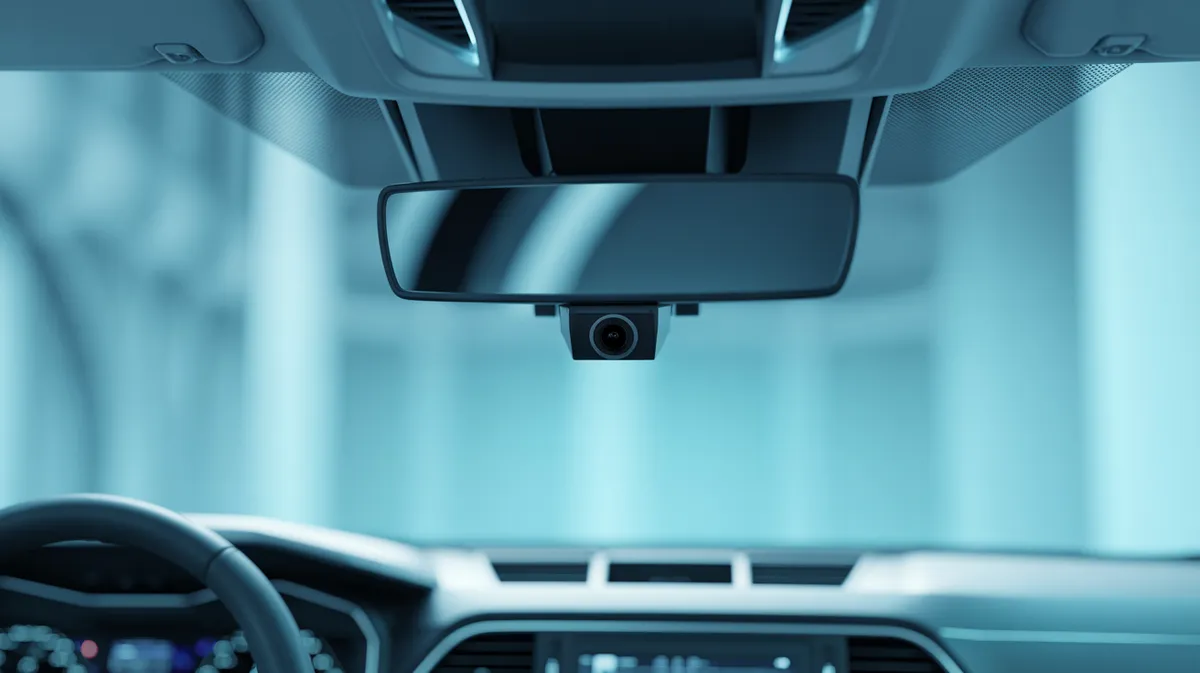
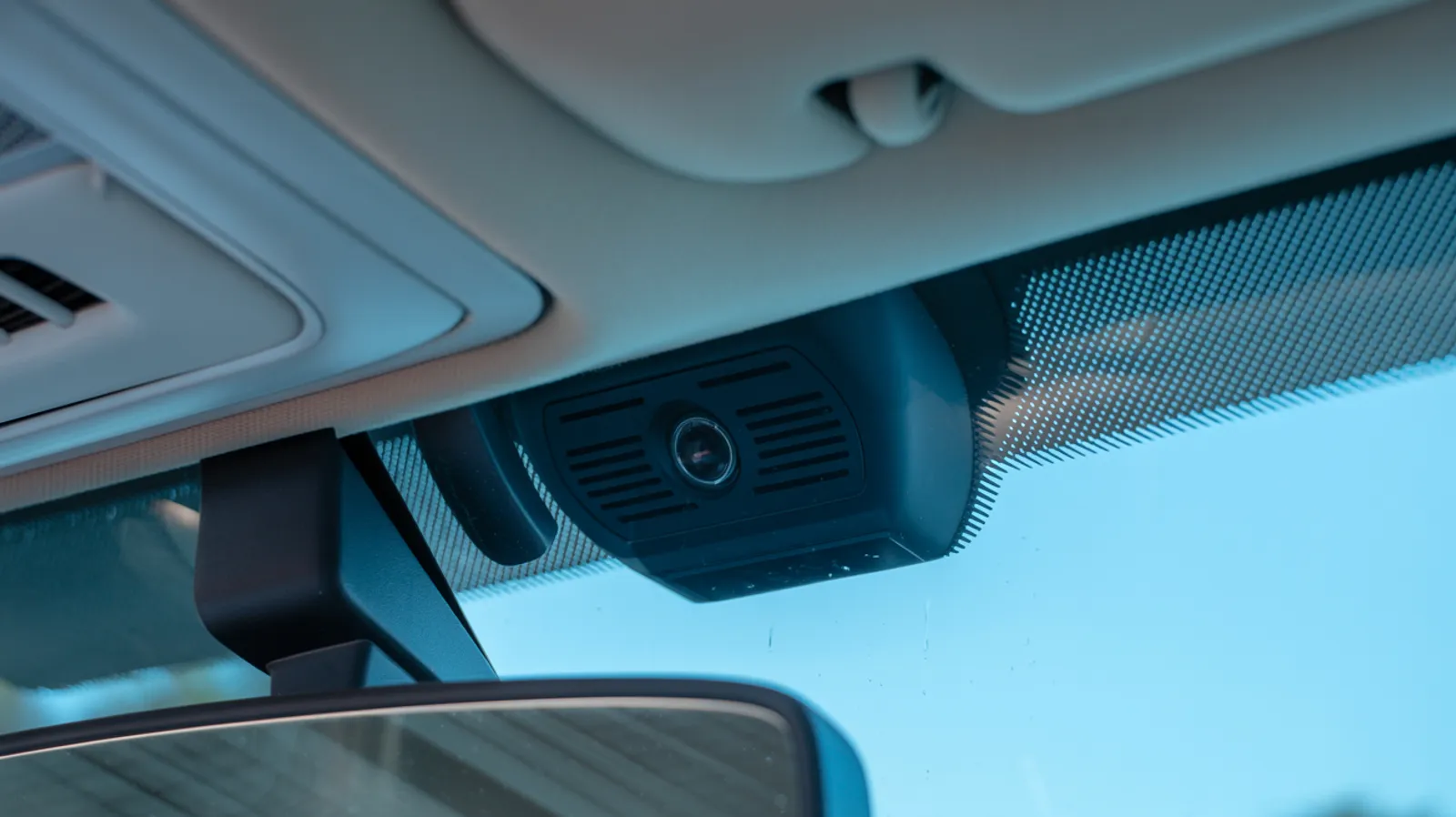
The camera behind your rear-view mirror is the eye for lane-keeping, forward-collision warning, automatic emergency braking, traffic-sign recognition and adaptive cruise. It looks out through a specific patch of the windshield, and its aim depends on the exact position and optical properties of the glass in front of it.
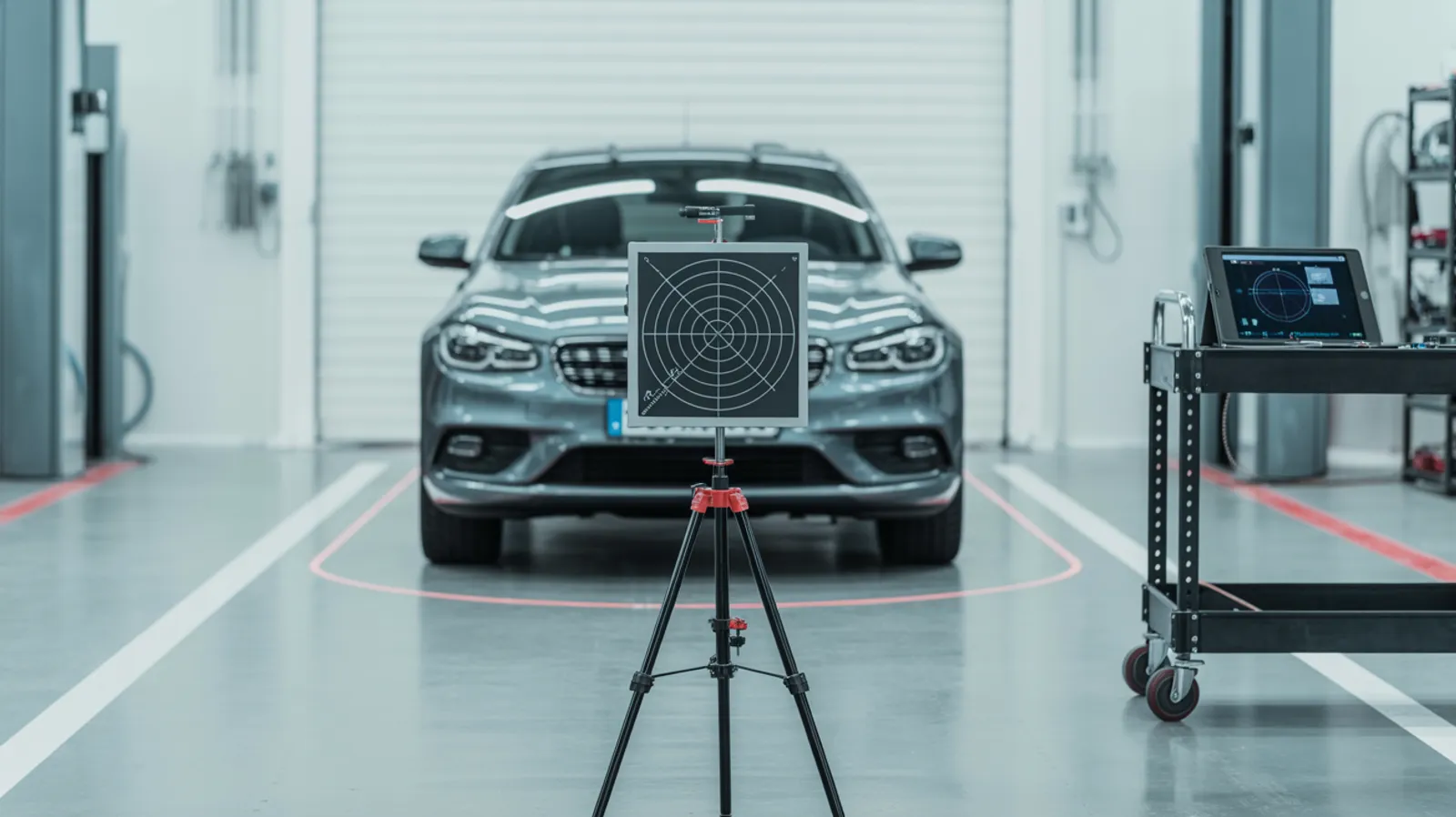
That's what makes windshield camera calibration a required step rather than an add-on. New glass means a new optical path, and the camera has to be re-taught where straight ahead actually is. A small error in aim at the lens grows the farther down the road the system is looking, and the car won't warn you about it — the system reads the road confidently from the wrong reference point. We handle calibration in-house with Autel equipment, typically about 30 minutes after the install — we go deeper on the static versus dynamic procedures in our guide to ADAS calibration after a windshield replacement.
The bracket the camera mounts to is worth mentioning too. On some vehicles it's bonded to the glass and comes attached to the new windshield; on others it transfers from the old one. Which applies depends on the vehicle and the glass supplier, and getting it wrong means the camera sits at the wrong angle before calibration even starts.
Heated zones and embedded wiring
Some windshields have a heated wiper park area at the base — fine conductive elements that melt ice off the blades. A smaller number have full-surface heating with hairline wires running through the laminate. Neither is common on cars that have spent their lives in the Valley, but plenty of vehicles here were bought elsewhere, and the option follows the VIN, not the zip code. Certain vehicles also route radio, GPS or telematics antennas through the glass.
The black ceramic band
The dark border around the edge, and the dotted gradient that fades out of it, isn't trim. It's a ceramic frit fired into the glass. It shields the urethane adhesive from UV — which matters more in Arizona than almost anywhere — hides the bond line and the wiring behind it, and gives the adhesive a properly prepared surface to grip. Damage in that band is one of the reasons a chip near the edge is treated differently than one in the middle of the glass.
What each feature actually changes at replacement
| What's in the glass | How to spot it | What it means for a replacement |
|---|---|---|
| Acoustic interlayer | Logo block marking in a lower corner | Must be matched, or the cabin gets noticeably louder |
| Solar / IR coating | Faint tint or color shift viewed at an angle; logo markings | Coated glass with the correct uncoated antenna windows |
| HUD wedge | A display projects onto the glass ahead of the wheel | HUD-specific glass only — wrong glass gives a permanent double image |
| Rain / light sensor | Housing behind the mirror, often a dark pad | New optical coupling pad; sensor transfers and gets re-seated |
| ADAS camera | Camera lens behind the mirror; lane-keep and AEB features | Recalibration after install, plus the correct bracket arrangement |
| Heated wiper park | Fine lines at the base of the glass | Glass with the heating element and its connector |
| Antenna / transponder windows | Small clear patches in the coating | Correct part, or toll tags and antennas read poorly |
The practical takeaway: fit is the easy part. Two windshields can drop into the same opening and seal perfectly while behaving completely differently once you drive away. That's what people mean when they say a windshield isn't a commodity part.
Why we ask for your VIN before quoting
None of the above is visible from a photo of your car. A 2021 crossover might have base glass, or acoustic glass, or acoustic plus solar plus a HUD wedge plus a camera and a rain sensor — same body, four different part numbers, meaningfully different prices. Decoding the VIN is how we identify the exact factory build, order the glass that matches it, and tell you up front whether calibration is part of the job.
It's also the honest reason auto glass quotes vary so much between shops. A quote against base glass will always look better than a quote against the correct glass, right up until the install.
The cheapest way to keep all of it: don't replace it
Every piece of technology described above is one more argument for saving the original windshield when it's still savable. A resin repair on a small chip takes about 15 minutes, keeps the factory glass and its coatings, keeps the HUD wedge, and skips calibration entirely because the camera's optical path never changes. Once damage crosses into replace-only territory, all of it comes back into play.
If you've got fresh damage, our windshield repair page covers where that line falls, and our windshield replacement service covers what happens when the damage is past it — including the calibration step for vehicles that need it.
Not sure which of these your windshield has? Send us your VIN and a photo of the damage and we'll tell you exactly what's in your glass, what a matching replacement costs, and whether calibration is required — free estimate within two hours during business hours, or call (480) 525-0335.
Need auto glass service in Phoenix?
Free estimate within 2 hours, mobile service, and insurance handled. Let's get you back on the road.
Frequently asked questions
You can physically fit one, but you shouldn't. HUD-equipped vehicles use a wedge-shaped interlayer that stops the projected image from doubling. Install flat, non-HUD glass and the display shows a ghost image offset from the real one, which is distracting at highway speed. Always match the glass to the HUD option.
Usually the sensor itself transfers to the new glass, but the optical gel pad or coupling gasket between the sensor and the windshield does not. That pad is a wear item and gets replaced. If it's reused and traps air, the sensor misreads the glass and the wipers sweep on a dry, sunny day.
Look at the printed logo block in a lower corner of the glass for markings like acoustic or solar, check whether a sensor housing sits behind the mirror, and see if a display projects onto the glass. The fastest answer is your VIN, which decodes the exact factory glass options for your car.