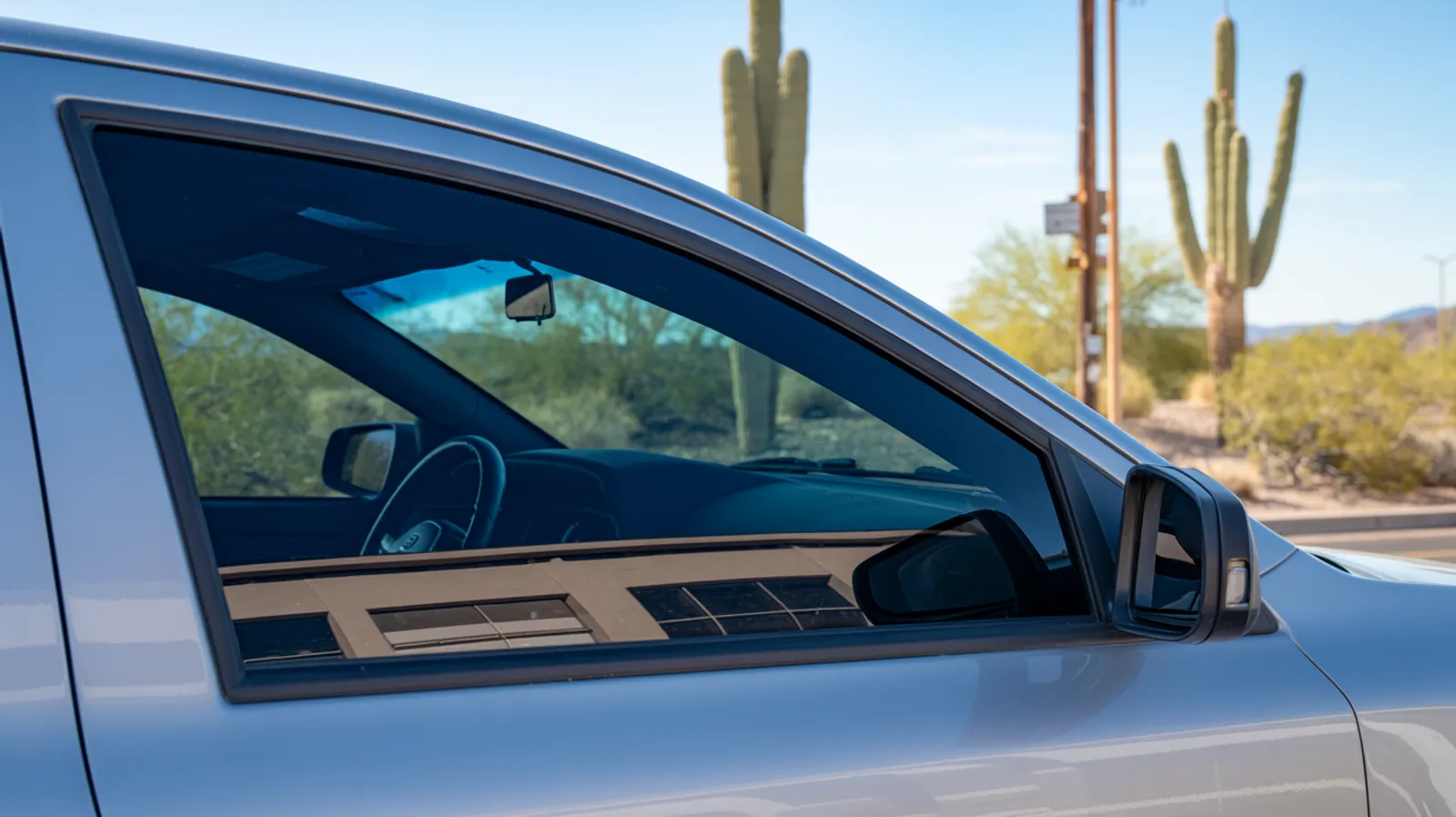
Ceramic tint blocks infrared heat. Regular dyed tint mostly just makes the glass darker. That single difference is why two cars with windows that look identical can feel nothing alike when you open the door after a July afternoon in a Chandler parking lot.
If you're choosing film right now, here's the honest comparison first — then what each row actually means when the dash reads 115°F.
The films, side by side
| Dyed (standard) | Carbon | Ceramic / Nano-ceramic | |
|---|---|---|---|
| How it blocks heat | Absorbs some visible light; darkness only | Carbon particles absorb a broader slice of heat energy | Ceramic particles reject infrared energy directly |
| Infrared rejection | Minimal | Moderate | Highest of the three |
| UV protection | Some | Good | Excellent |
| Glare reduction | Good (it's dark) | Good | Good, and available in lighter shades |
| Signal interference | None (non-metallic) | None | None |
| Color stability | Prone to purpling and fading | Stable, no purpling | Most stable in sustained UV |
| Adhesive life in AZ sun | Shortest — bubbling is the usual failure | Longer | Longest |
| Visibility at night | Dark shades cut night vision | Same trade-off | Can go lighter and still reject heat |
| Relative cost | Lowest | Middle | Highest |
One film type isn't on that table, and it should be on your radar: metalized film. It rejects heat well using a thin reflective metal layer, but that layer is conductive. More on why that matters below.
Darkness is not heat rejection
This is the misunderstanding that costs Arizona drivers the most money.
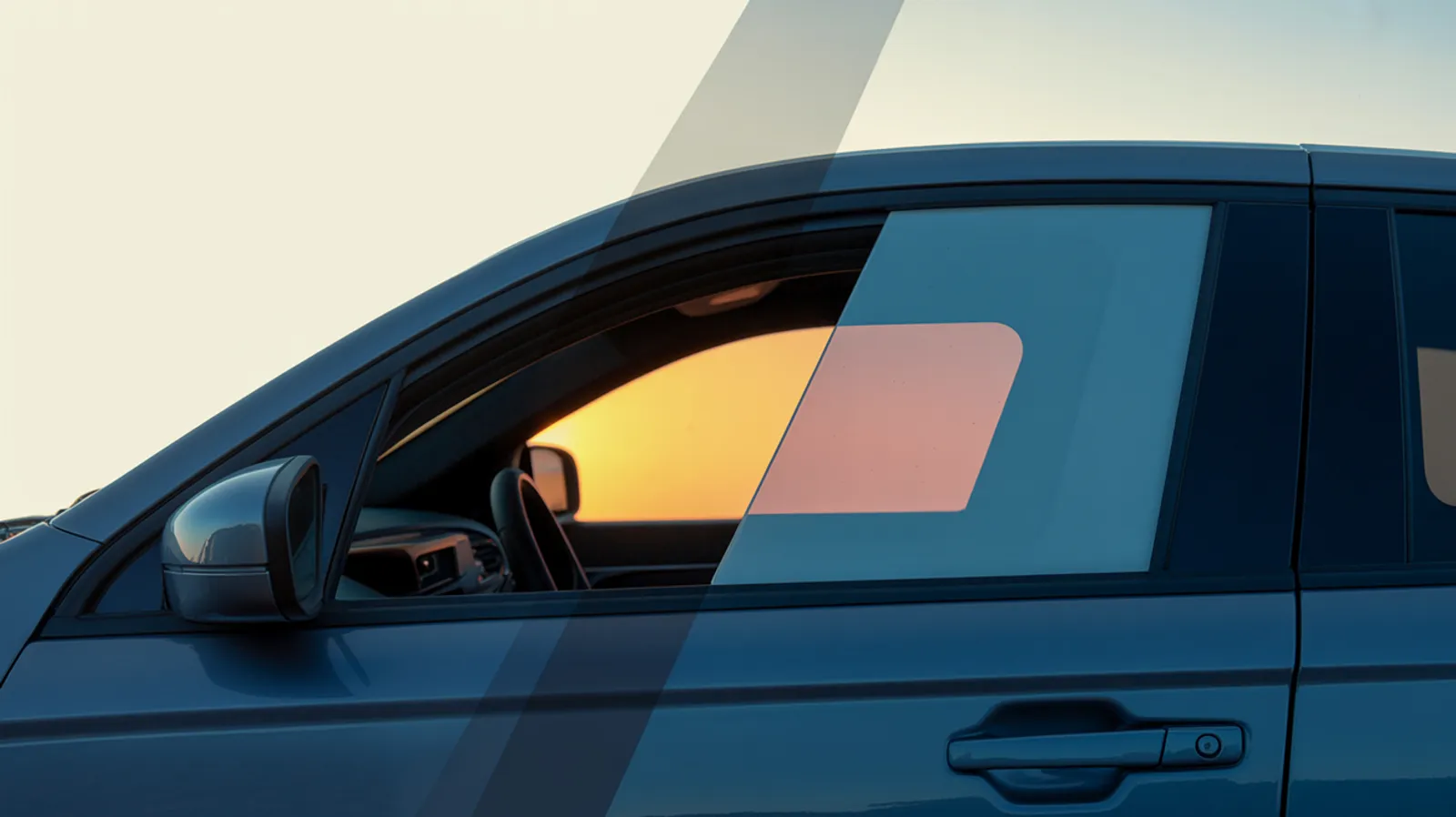
Tint darkness is measured as VLT — visible light transmission, the percentage of visible light that gets through. A 5% film is limo dark. A 70% film looks nearly clear. VLT describes exactly one thing: how much of the visible part of the spectrum passes through your window.
The heat you feel is mostly infrared, which is invisible. A film can be pitch black and still let a large share of infrared through, and a film can look almost clear and reject a lot of it. Darkness and heat rejection are two separate specs that happen to be sold on the same roll.
That's why the "just go as dark as legal" approach backfires here. You end up with a cabin that's dim, harder to see out of at night, still hot, and — on front side windows — potentially over the legal limit. What you actually want is the infrared number, and on dyed film that number is low no matter what shade you pick.
Ceramic film is the practical answer to that problem. Because the heat rejection comes from the ceramic particles rather than from sheer darkness, you can run a lighter, more legal, more night-drivable shade and still take real load off the A/C. That's the core case for ceramic window tinting in the Valley.
What infrared rejection buys you in Arizona
Concretely, a few things:
- Lower peak cabin temperature on a car parked outside all day — the difference between a steering wheel you can hold and one you can't.
- Less A/C load. The system reaches a comfortable temperature faster and doesn't have to fight incoming radiant heat as hard to hold it.
- Cooler surfaces. Dash, seats, and door panels absorb less radiant energy, which is also what slows down cracked dashboards and faded upholstery.
- Comfort where it counts. Direct sun on your arm or the side of your face through a side window is infrared doing its work. Ceramic film cuts that noticeably.
We won't quote you a percentage — the real number depends on the specific film, the shade, your glass, and where the sun is hitting the car. Any shop quoting one universal heat-rejection figure for "ceramic" is selling, not measuring. What we will say is that the gap between dyed and ceramic is large enough that most customers notice it in the first week, and it's the reason nano-ceramic film has largely taken over the premium end of the market.
The signal interference problem
Metalized films earned a real reputation for heat rejection before ceramic existed, and some shops still push them because they're cheaper than ceramic while outperforming dyed film on heat.
The catch is the metal. A conductive layer sitting across your glass can interfere with radio-frequency signals passing through it:
- GPS and navigation
- Cell reception inside the car
- Satellite radio
- Keyless entry and remote start
- Tire pressure monitoring sensors
- Windshield-mounted toll transponders
Ceramic and nano-ceramic films are non-conductive. They reject infrared through the properties of the ceramic particles themselves, not by reflecting energy off metal, so there's nothing in the film to interfere with a signal. If your vehicle leans heavily on connected features — and most vehicles built in the last decade do — this alone is often the deciding factor.
Dyed film, to be fair, doesn't cause signal problems either. It just doesn't do much about heat.
Fade resistance and the Arizona UV clock
Every film in the country is rated on the same specs. Arizona is where those ratings get audited.
Dyed film fails in a predictable sequence: the dye breaks down under sustained UV, the film shifts purple, and the adhesive gives up and bubbles. In a mild climate that process takes a long time. Under Phoenix sun, on glass that swings from a cold overnight low to a scorching afternoon roof-rack temperature every single day, it moves faster. If you've ever seen a purple-windowed sedan in a grocery store lot, you've seen dyed film that lost the argument with the sun.
Carbon and ceramic films don't contain the dye that causes purpling, and their construction holds up better to repeated thermal cycling. That's not a marketing claim so much as a materials one — there's simply nothing in the film to turn purple.
This is also where the install itself matters. Film that's cut clean, edged properly, and squeegeed without contamination lasts longer in this climate than the same film installed carelessly, because every trapped speck and lifted edge is a starting point for failure under heat. Our window tinting work carries a lifetime nationwide workmanship warranty on the install, which is the part of the job we control.
What Arizona law allows
Current Arizona tint law sets these limits:
- Rear window and back side windows: any darkness.
- Front side windows: must allow more than 33% of light through.
- Windshield: non-reflective tint permitted above the AS-1 line only.
Tint statutes do get amended, so confirm the current law before you commit to a shade — especially if you're moving a vehicle here from another state with different rules.
Note how well this maps to ceramic film's advantage. The front side windows are the most restricted glass on the car and also the glass your arms and face sit next to. A dyed film limited to 35% VLT does very little for heat. A ceramic film at that same legal shade does considerably more. The law caps your darkness, not your infrared rejection.
So which one should you buy?
Dyed film makes sense if: you want privacy and glare reduction on a budget, the car lives in a garage or a covered space, or it's a short-term vehicle you won't own long enough to see the film age.
Carbon makes sense if: you want a meaningful step up in heat and UV performance and a film that won't purple, without going all the way to ceramic pricing.
Ceramic or nano-ceramic makes sense if: the car parks outside in Arizona. That's most of us. It's also the right call if you need to stay lighter than you'd like for legal or night-driving reasons and still want real heat rejection, if you have kids in the back seat, or if you're protecting a nice interior.
For a full vehicle, most drivers land on ceramic on the front doors — where the heat and the legal limit collide — and choose their shade on the back glass based on privacy preference. We'll walk through the options for your specific vehicle when we quote car window tinting, including whether it's worth running the same film all the way around.
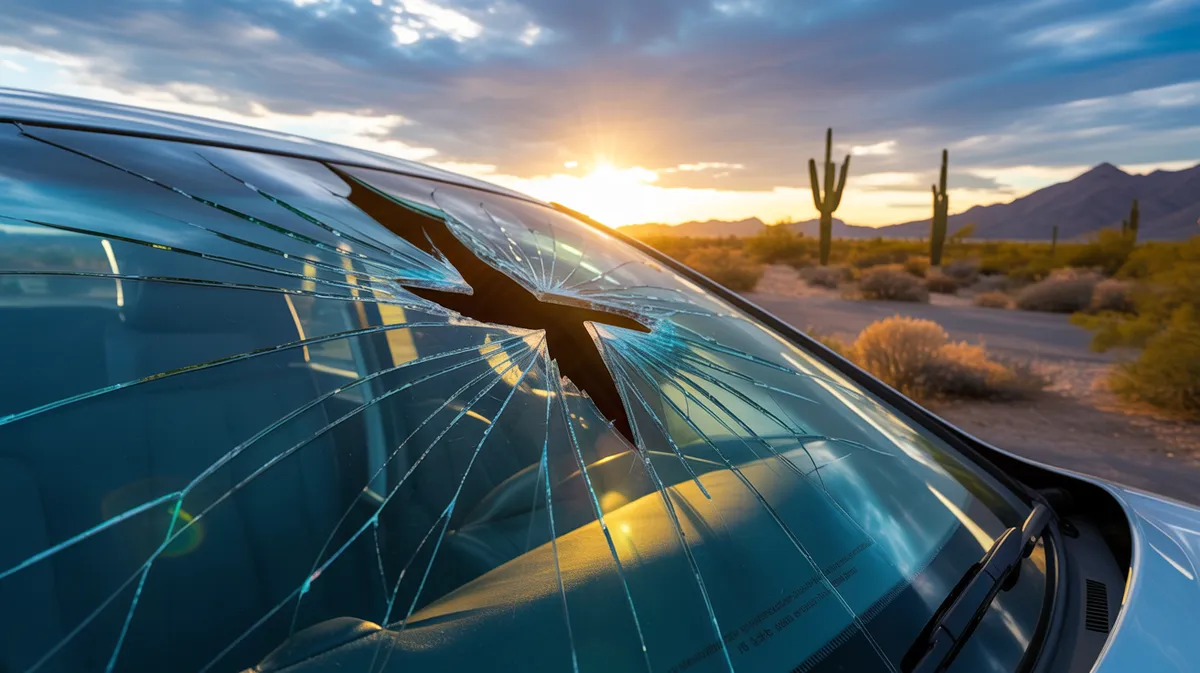
One thing tint won't do, regardless of type: protect your windshield from thermal stress. Film above the AS-1 line is a small strip, and the daily heat cycle that turns Arizona chips into cracks doesn't care what's on your side windows. If you already have a chip, handle that separately and quickly.
Installation day
A full tint job runs about two hours. That's the film cut, cleaned, applied, and squeegeed on every window we're doing. You'll be asked to leave the windows up for a short period afterward while the adhesive sets — the exact time depends on the film and the weather, and we'll tell you the number for your job rather than a generic one.
We work on any make and model, we're mobile across Phoenix and Central Arizona, and the shop is at 2910 N. 7th Ave if you'd rather come to us.
Compare shades on your own car
The fastest way to settle this is to look at real film samples against your own glass, in Arizona light, with a technician explaining what each one actually rejects. Call or text (480) 525-0335 or request a free estimate — we'll get you a quote within two hours during business hours, and you can see what other Valley drivers have said about the work while you decide.
Need auto glass service in Phoenix?
Free estimate within 2 hours, mobile service, and insurance handled. Let's get you back on the road.
Frequently asked questions
For a daily driver parked outside in Arizona, usually yes. Dyed film darkens the cabin but lets most infrared heat through, so the car still bakes. Ceramic film targets that infrared energy directly, so the difference shows up in cabin temperature and A/C load — not just in how the windows look.
No. Signal interference comes from metalized films, which use a reflective metal layer that can disrupt radio-frequency signals — GPS, cell reception, satellite radio, tire pressure sensors, and toll transponders. Ceramic and nano-ceramic films use non-conductive ceramic particles instead, so they block heat without blocking signal.
Under current Arizona law, rear and back side windows can be any darkness. Front side windows must allow more than 33% of light through. The windshield may carry non-reflective tint above the AS-1 line only. Tint limits can change, so confirm the current statute before choosing a shade.