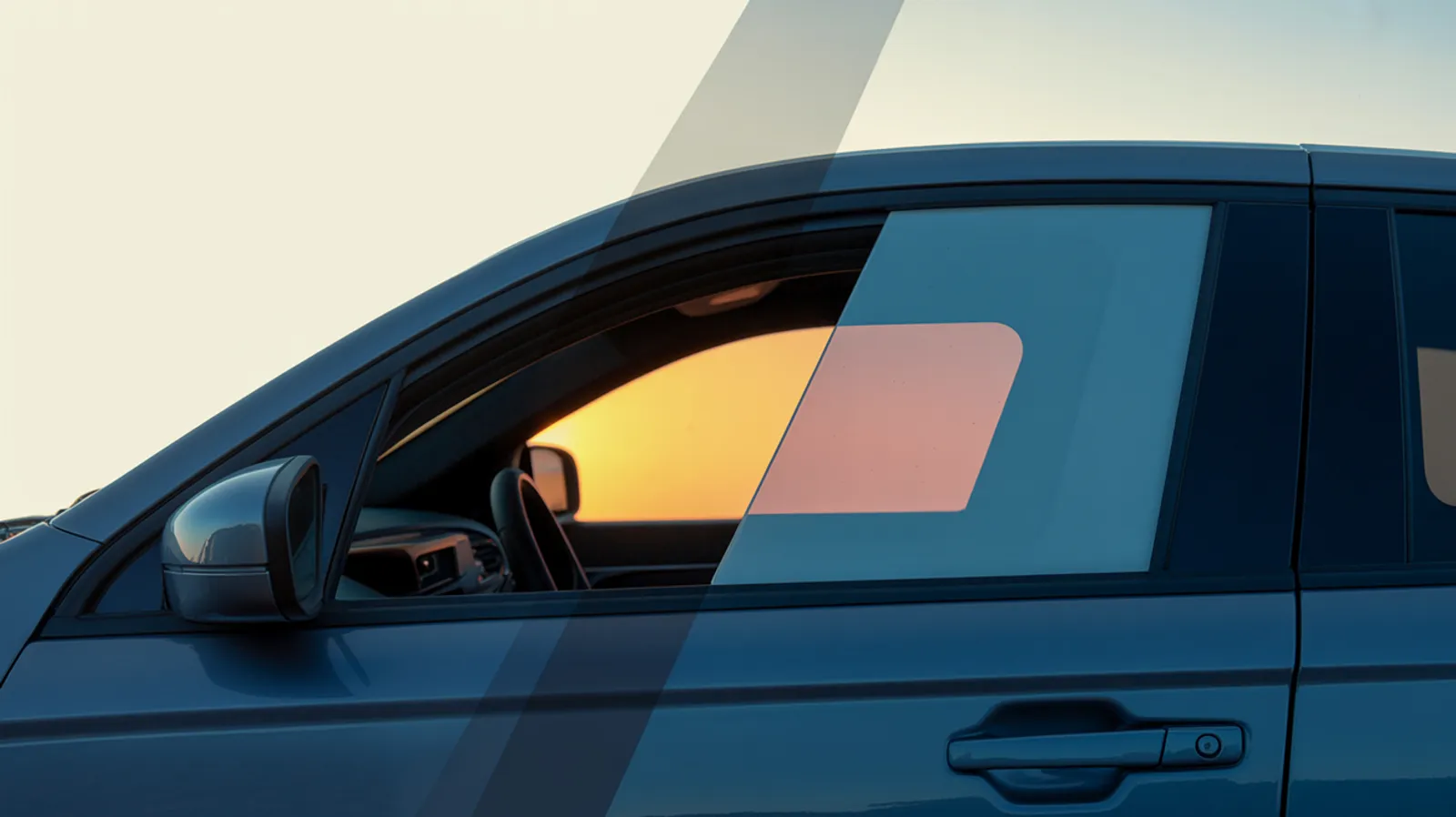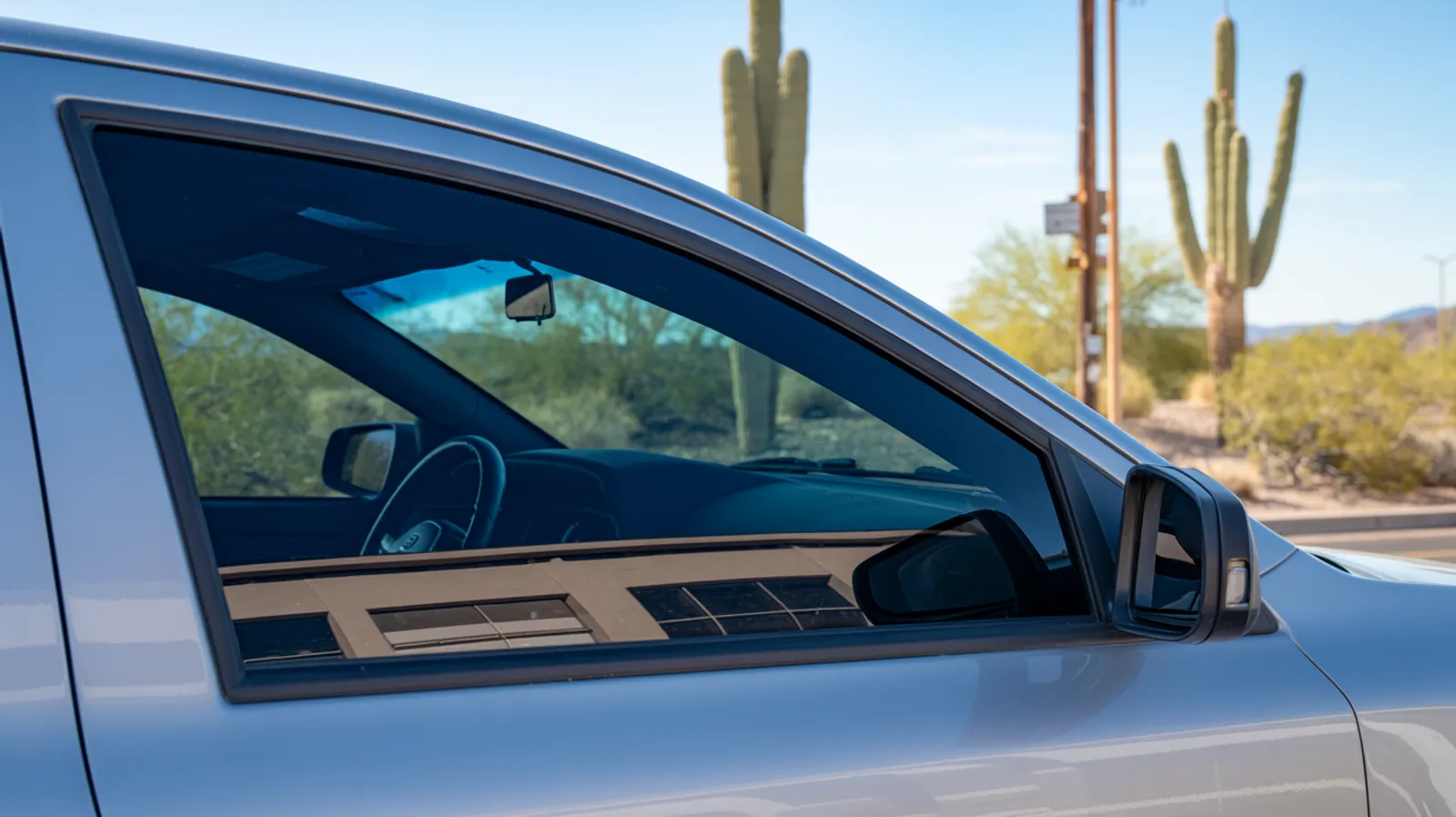
Arizona's tint rules are simpler than most drivers expect. Your rear window and back side windows can be as dark as you want. Your front side windows have to let more than 33% of visible light through. Your windshield can only take non-reflective tint above the AS-1 line. That's the core of it.
The complications come from what those numbers actually measure, where the AS-1 line is on your particular vehicle, and the fact that "legal" and "keeps the car cool" are two different problems. Here's the practical version, from people who install film in this heat every week.
The limits at a glance
| Window | What Arizona allows |
|---|---|
| Rear window | Any darkness |
| Back side windows | Any darkness |
| Front side windows | Must allow more than 33% of light through |
| Windshield | Non-reflective tint above the AS-1 line only |
One important caveat up front: statutes get amended. Before you commit to a film — especially if you're going as dark as the law allows — confirm the current wording in the Arizona Revised Statutes or with ADOT. Any shop's summary, this one included, is a starting point and not a legal ruling.
What VLT actually means
VLT stands for Visible Light Transmission. It's the percentage of visible light that makes it through the window and into the car.
The number runs backwards from how people talk about it. Lower VLT means darker. A 5% film — "limo tint" — lets almost nothing through. A 70% film is barely noticeable. So Arizona's "more than 33%" front-window rule means the glass has to be on the lighter side of that line.
Two things trip people up:
The meter reads the glass and the film together, not the film alone. Your factory door glass already blocks some light before any film goes on. Put a 35% film on glass that's already cutting light, and the finished measurement lands lower than 35%. This is why installers commonly reach for films rated around 35% on front doors, and why a careful shop measures the finished window instead of trusting the box.
Factory privacy glass isn't film. Lots of SUVs and trucks come from the factory with dark rear glass. In Arizona that's a non-issue for darkness, since the rear window and back side windows aren't limited — but it does mean adding film back there changes how much heat you're rejecting, not whether you're legal.
The AS-1 line on your windshield
Look along the top edge of your windshield, usually toward one of the upper corners, and you'll find small etched lettering that includes AS-1. That marking is the reference point Arizona's windshield rule uses: non-reflective tint is permitted above it, and the rest of the windshield stays clear.
A few practical notes:
- The AS-1 marking is etched into the glass at the factory. It moves with the glass, so a replacement windshield carries its own marking.
- If you genuinely can't locate it on your vehicle, don't estimate. Ask your installer to find it before any film goes on the windshield, or check the statute language yourself.
- "Non-reflective" matters as much as the position. Mirrored or metallic-looking film is a separate issue from darkness, and it's one of the things drivers most often get wrong.
If you've had glass replaced recently and are planning tint, it's worth having both jobs looked at together — see our auto glass replacement page for how the two schedule around each other.
Medical exemptions exist
Arizona law does make allowance for drivers with medical conditions that require more protection from sunlight than the standard limits permit. That much is real and worth knowing about if sun exposure is a genuine health issue for you.
What we will not do is tell you what qualifies, what form to file, or who has to sign it. Those details are set by the state, they change, and getting them wrong means either an unnecessary citation or film you have to strip off. Go to the source: the Arizona Revised Statutes and ADOT. Bring the paperwork to your installer, and any competent shop will work to it.
How long does tint take to cure?
Installation and curing are two different clocks. A typical full-vehicle tint installation takes about two hours in the bay. Curing happens afterward, on your time, in your driveway.
Here's what's actually going on. Film is applied with a mounting solution — essentially soapy water — that lets the installer slide it into position. Most of that gets squeegeed out, but a thin layer stays trapped between the film and the glass. Curing is that moisture working its way out through the film.
While it's happening, expect:
- Slight haze or cloudiness. Normal. It clears.
- Small water pockets or bubbles, often near the edges or in the corners. Also normal, and they shrink as the moisture leaves.
- Film that hasn't fully bonded at the edges yet. This is the one that matters.
The single rule: leave your windows up until your installer says otherwise. Rolling a window down before the edge has bonded can peel the film right off the glass, and that's a redo, not a warranty defect.
How long is "until"? It genuinely depends — on the film construction, the adhesive, the season, and how much sun the car gets. This is one place where Arizona works in your favor: heat and direct sunlight drive that moisture out much faster than a cool, overcast week would. A car parked in a Phoenix parking lot in July is curing considerably faster than the same car in a garage in January. Because the range is real and vehicle-specific, ask your installer for the window that applies to your film rather than trusting a number off the internet. Parking in the sun for a few days, ironically, is the best thing you can do.
Don't clean the inside of the glass during the cure, and skip ammonia-based cleaners on tinted windows permanently — they attack the film.
Legal darkness and actual heat rejection are different things
This is the part that saves Arizona drivers the most money and discomfort, and it has nothing to do with the statute.
Most of the heat load coming through your windows is infrared, which you can't see. Visible darkness — the VLT number the law regulates — is only loosely related to how much of that heat a film stops. A cheap dyed film can look aggressively dark and still let a lot of heat in. A quality ceramic film can sit at a legal 35% on your front doors and reject substantially more heat than the dark film next to it.
For a Phoenix commute, that trade is worth understanding before you pick a shade:
- Dyed films are the budget option, and Arizona sun is hard on them. Fading and the classic purple shift are what years of desert UV do to lower-grade film.
- Ceramic and nano-ceramic films cost more up front and hold their color and performance far better under this kind of exposure. They also don't interfere with cell, GPS, or radio signals the way metallic films can.
So the smart approach isn't "how dark can I legally go on the front." It's "how much heat can I reject while staying legal." You can run a compliant 35% up front, go as dark as you like on the rear and back side windows, and end up with a car that's dramatically cooler than a dark-but-cheap job — while never having to think about the 33% rule again.
Our car window tinting page walks through the film options we carry and what each one is actually good at.
Before you book
Three things worth doing:
- Verify the current statute yourself if you're going close to the limit. Legislatures amend vehicle code, and a citation is a bad way to find out.
- Ask the shop to measure the finished window, not just quote you a film percentage. The glass and the film get read together.
- Ask for the cure guidance in writing for the specific film going on your car, so you know exactly when the windows can come down.
Planning tint in Phoenix and not sure which film makes sense for how you drive? Call or text Glass Detail at (480) 525-0335 with your year, make, and model — we'll tell you what stays legal on the front, what's worth doing on the rear, and how long you'll need to leave the windows up afterward. Free estimates come back within two hours during business hours.
Need auto glass service in Phoenix?
Free estimate within 2 hours, mobile service, and insurance handled. Let's get you back on the road.
Frequently asked questions
No. Arizona requires front side windows to allow more than 33% of light through, and a 20% film blocks far more than that. Twenty percent is a common choice for rear and back side windows, where Arizona does not limit darkness. Statutes can change, so confirm the current limit before you buy.
Curing is the trapped mounting solution evaporating out through the film, and the time depends on the film, the adhesive, and the weather. Arizona sun speeds it up considerably compared with a cool, overcast climate. Your installer will give you a specific window for the film they used — ask before you drive off, and leave the windows up until then.
Arizona law does provide for medical exemptions from the tint limits. The qualifying conditions, paperwork, and who has to sign off are set by the state, and those requirements change, so verify the current process through the Arizona statutes or ADOT rather than relying on a shop's summary — including ours.